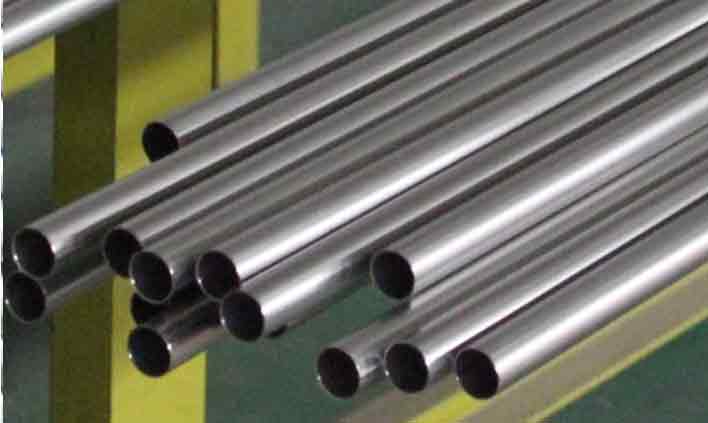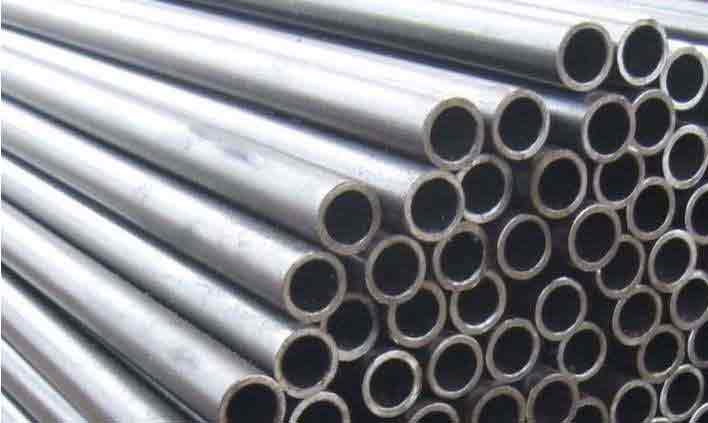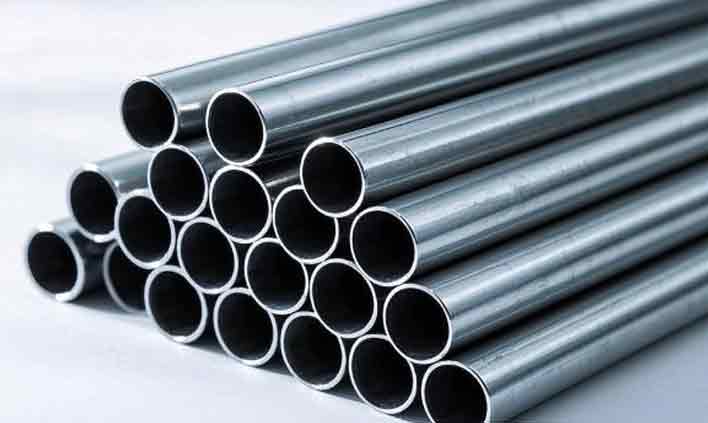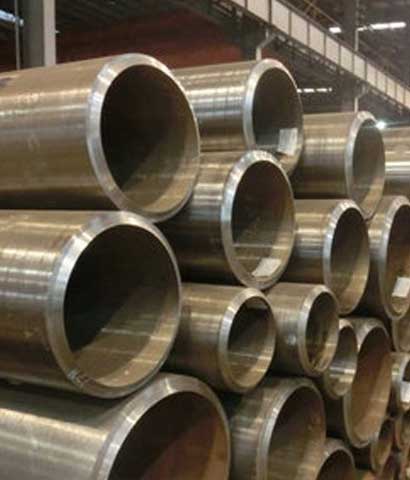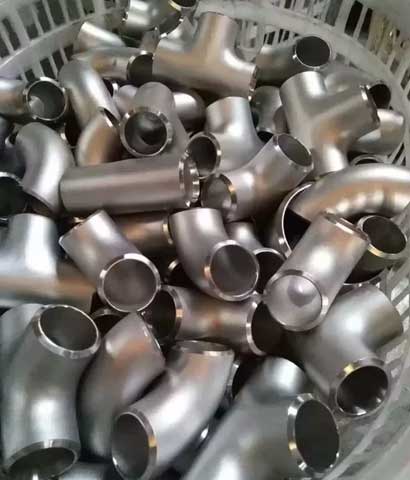
Tubewell Steel & Engg. Co. is a leading manufacturer and stockist specializing in Alloy Steel Pipes, Tubes, Fittings and Flanges for critical industrial applications.
Creep strength enhanced 9Cr-1Mo-V-Nb seamless tubes for superheaters and reheaters in supercritical and ultra-supercritical boilers.
Tubewell Steel & Engg. Co. manufactures, stocks and supplies ASTM A213 T91 tubes, a modified 9Cr-1Mo steel micro-alloyed with vanadium, niobium and nitrogen. In the normalized and tempered condition, T91 offers far higher creep-rupture strength than the conventional chrome-moly grades. This allows thinner, lighter walls in supercritical boiler superheaters and reheaters.
Why A213 T91 is the benchmark tube for modern high-efficiency boilers
ASTM A213 T91 is a seamless ferritic-martensitic alloy steel tube with 8.0–9.5% chromium and 0.85–1.05% molybdenum, micro-alloyed with 0.18–0.25% vanadium, 0.06–0.10% niobium and 0.030–0.070% nitrogen. These additions form fine, stable vanadium and niobium carbonitrides that pin the tempered martensite structure. The result is creep-rupture strength well above that of T22 and T9, together with excellent oxidation resistance and a low thermal expansion coefficient at metal temperatures up to about 650°C.
T91 tubes must be normalized at 1040–1080°C and tempered at 730–800°C, and we control and record both stages on every lot. Current editions of A213 recognise T91 Type 1 and the tighter-chemistry Type 2. We can supply either type and will confirm which one is certified at the order stage. Each lot ships with EN 10204 3.1 certificates, hardness results and microstructure reports, and IBR Form III-A and third-party inspection are available.
Standard supply range for ASTM A213 T91 tubes
| Parameter | Details |
|---|---|
| Standard | ASTM A213, ASME SA213 |
| General Requirements | ASTM A1016 / A1016M |
| Grade | T91 Type 1 / Type 2 (UNS K90901) |
| Type | Seamless – Hot Finished / Cold Drawn |
| Outside Diameter | 12.7 mm to 101.6 mm (1/2" – 4"); larger ODs on request |
| Wall Thickness | 1.65 mm to 12.7 mm (16 BWG – 1/2"), average or minimum wall |
| Length | Single Random, Double Random, Cut Length (up to 18 m) |
| Form | Straight, U-Bent, Serpentine Coils |
| Ends | Plain End, Bevelled End |
| Heat Treatment | Normalized 1040–1080°C & Tempered 730–800°C |
| Surface | Black Painted, Varnished, Anti-rust Oil, Pickled |
| Testing | Hydrostatic or Eddy Current, Ultrasonic, Flattening, Flaring, Hardness, Tensile, Microstructure, PMI |
| Certificates | EN 10204 3.1 / 3.2, IBR Form III-A, TPI Reports |
International equivalents of A213 T91
| Standard | ASTM | UNS | EN | DIN / W.Nr. | JIS | BS |
|---|---|---|---|---|---|---|
| T91 | A213 T91 | K90901 | X10CrMoVNb9-1 | 1.4903 | STBA 28 | – |
Weight %, as per ASTM A213 (T91 Type 1)
| Grade | C | Mn | P | S | Si | Cr | Mo | Ni | V | Nb | N | Al |
|---|---|---|---|---|---|---|---|---|---|---|---|---|
| A213 T91 | 0.07 – 0.14 | 0.30 – 0.60 | 0.020 max | 0.010 max | 0.20 – 0.50 | 8.00 – 9.50 | 0.85 – 1.05 | 0.40 max | 0.18 – 0.25 | 0.06 – 0.10 | 0.030 – 0.070 | 0.02 max |
Ti 0.01 max and Zr 0.01 max. T91 Type 2 has tighter limits (including S 0.005 max, Ni 0.20 max and an N/Al ratio of at least 4.0); details are available on request.
Minimum values at room temperature, as per ASTM A213
| Grade | Tensile Strength | Yield Strength (0.2%) | Elongation in 2" | Hardness |
|---|---|---|---|---|
| A213 T91 | 585 MPa (85 ksi) min | 415 MPa (60 ksi) min | 20% min | 190 – 250 HBW (25 HRC max) |
Typical values (for reference)
| Property | Metric | Imperial |
|---|---|---|
| Density | 7.77 g/cm³ | 0.281 lb/in³ |
| Melting Range | 1420 – 1500 °C | 2590 – 2730 °F |
| Modulus of Elasticity | 218 GPa | 31.6 × 10³ ksi |
| Thermal Conductivity (100°C) | 26 W/m·K | 15.0 BTU/h·ft·°F |
| Mean Thermal Expansion (20–300°C) | 11.2 µm/m·°C | 6.2 µin/in·°F |
| Specific Heat | 0.46 J/g·°C | 0.11 BTU/lb·°F |
| Max. Service Temperature | ≈ 650 °C | ≈ 1200 °F |
Tube OD vs wall thickness (BWG / mm) – weight in kg/m
| OD (inch) | OD (mm) | 16 BWG (1.65) | 14 BWG (2.11) | 12 BWG (2.77) | 10 BWG (3.40) | 8 BWG (4.19) |
|---|---|---|---|---|---|---|
| 1/2" | 12.70 | 0.45 | 0.55 | 0.68 | 0.78 | – |
| 5/8" | 15.88 | 0.58 | 0.72 | 0.90 | 1.05 | – |
| 3/4" | 19.05 | 0.71 | 0.88 | 1.11 | 1.31 | 1.54 |
| 1" | 25.40 | 0.97 | 1.21 | 1.55 | 1.84 | 2.19 |
| 1 1/4" | 31.75 | 1.22 | 1.54 | 1.98 | 2.38 | 2.85 |
| 1 1/2" | 38.10 | 1.48 | 1.87 | 2.41 | 2.91 | 3.50 |
| 1 3/4" | 44.45 | 1.74 | 2.20 | 2.85 | 3.44 | 4.16 |
| 2" | 50.80 | 2.00 | 2.53 | 3.28 | 3.97 | 4.82 |
| 2 1/2" | 63.50 | 2.52 | 3.19 | 4.15 | 5.04 | 6.13 |
| 3" | 76.20 | 3.03 | 3.86 | 5.02 | 6.10 | 7.44 |
| 3 1/2" | 88.90 | 3.55 | 4.52 | 5.88 | 7.17 | 8.75 |
| 4" | 101.60 | 4.07 | 5.18 | 6.75 | 8.23 | 10.06 |
Column headings show BWG gauge with wall thickness in mm; values are weight in kg/m, calculated as (OD − WT) × WT × 0.02466. Values are nominal; actual weights may vary within ASTM A1016 tolerances.
Where ASTM A213 T91 tubes are used
Final superheater and reheater coils in supercritical and USC units.
HP superheater and reheater harps that see frequent cycling.
Outlet header stubs and link tubes at the highest steam temperatures.
High-temperature heater coils needing strength and oxidation resistance.
Steam generator and receiver tubes in advanced energy plants.
Process heaters and exchangers in severe high-temperature duties.
Quality you can verify on every heat
Large inventory for fast dispatch
MTC EN 10204 3.1 / 3.2
Positive material identification
Pan-India & export shipping
Quick answers about A213 T91 tubes
Get competitive pricing, ready stock and complete documentation.